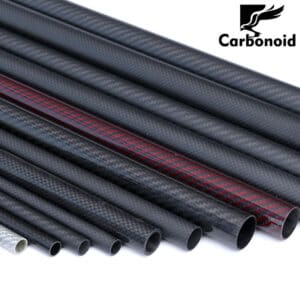
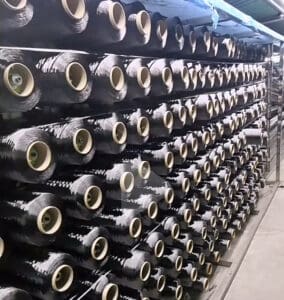
The Application of Carbon Fiber Tubes in Aerospace Industry
Airframe and Structural Components
Fuselage and Wing Structures
Carbon fiber tubes are now widely used in fuselage frames and wing spars to deliver exceptional structural efficiency. Compared to conventional metals, they provide up to 70% weight savings while retaining superior mechanical strength. This allows aircraft manufacturers to increase range, improve payload ratios, and lower fuel consumption. Carbon fiber tubes are especially beneficial in next-generation aircraft such as the Boeing 787 and Airbus A350, where structural optimization directly enhances aerodynamic...
Landing Gear Components
In landing gear assemblies, carbon fiber tubes are employed in elements like drag struts, side braces, and actuator housings. Their high fatigue resistance and load absorption characteristics make them ideal for handling the stresses of takeoff and landing cycles. Additionally, reducing the weight of landing gear improves aircraft balance and lowers stress on fuselage structures.
Empennage Structures
Horizontal stabilizers, vertical fins, and rudder control surfaces increasingly incorporate carbon fiber tubular spars. These parts are subjected to complex torsional forces, and carbon fiber’s anisotropic properties allow engineers to tailor stiffness precisely where needed. The result is enhanced flutter resistance, improved control authority, and a more responsive flight experience.
Aerospace Instrumentation and Electronics
Avionics Housings
Carbon fiber tubes are ideal for enclosing sensitive avionics hardware. Their low electrical conductivity and excellent EMI shielding properties reduce signal interference while maintaining light weight. Compared to metallic housings, carbon fiber casings contribute to better thermal management and longer component life cycles in mission-critical systems such as flight control computers and communication modules.
Sensor Casings
Sensors used for pressure, temperature, and acceleration require rugged housings capable of enduring harsh environments. Carbon fiber tubes offer high stiffness-to-mass ratios and excellent thermal stability, making them ideal for mounting on engine nacelles, fuselage skins, or interior monitoring panels. Their reliability is especially valued in unmanned aerial systems (UAS) and high-performance aircraft.
Antenna Structures
In radio and satellite communication systems, carbon fiber tubes are used for antenna booms and supports due to their low dielectric constant and minimal RF interference. Their stiffness ensures precise alignment, while their resistance to environmental degradation ensures long-term signal fidelity even in high-humidity or high-vibration settings.
Aerospace Propulsion Systems
Engine Mounts and Nacelles
Engine nacelles and pylons benefit from carbon fiber tube reinforcements that reduce weight while preserving rigidity. CFRP tubes can endure the thermal and vibrational environments typical near engines and offer enhanced resistance to fatigue. Their integration into hybrid nacelle systems helps manufacturers meet both performance and noise reduction targets.
Turbine Shafts and Compressor Casings
Advanced carbon fiber tubes are used in lightweight rotating shafts and casings for auxiliary power units (APUs) and low-pressure compressors. These components benefit from the high-speed rotational stability of CFRP tubes, which reduce inertia and improve response rates during throttle transitions. Reduced component weight also minimizes bearing loads, extending service intervals.
Thrust Reverser Structures
Thrust reverser mechanisms often incorporate carbon fiber tubes in actuator supports, guide rails, and locking mechanisms. These tubes withstand compressive loads during landing deceleration events and maintain alignment under cyclic strain. CFRP solutions offer an optimal balance of strength, weight, and flame resistance to meet FAA/EASA certification.
Aerospace Interiors and Furnishings
Seating Frames
Modern aircraft seating frames now use carbon fiber tubes to meet 16G crashworthiness standards while saving up to 30% weight per seat. Their integration improves floor loading distribution and allows for sleeker seat designs, enabling airlines to offer more spacious layouts without increasing overall aircraft weight.
Overhead Bins and Luggage Compartments
Support beams and mounting brackets inside luggage bins often utilize carbon fiber tubes to achieve high strength in limited space. These tubes reduce weight in overhead modules, improving aircraft center-of-gravity distribution and reducing loads on the fuselage structure. Long-term reliability and dimensional stability ensure safety and passenger satisfaction.
Partitions and Dividers
Cabin dividers and lavatory walls reinforced with carbon fiber tubes offer a combination of stiffness, low mass, and FST (flame/smoke/toxicity) compliance. Their use simplifies installation, enhances aesthetics, and improves acoustic dampening, providing comfort and design flexibility for airline operators and VIP aircraft manufacturers alike.
Benefits of Carbon Fiber Tubes for B2B Aerospace Buyers
1. Performance Optimization
Carbon fiber’s high strength-to-weight ratio supports fuel efficiency and payload expansion, directly benefiting aircraft OEMs and airline operators.
2. Lifecycle Cost Reduction
Lower material fatigue and corrosion resistance reduce inspection frequency, repair labor, and total cost of ownership over the aircraft’s operational life.
3. Design Freedom
Engineers can tailor the fiber orientation of carbon fiber tubes to resist specific stress profiles, enabling innovative, application-specific structures not achievable with isotropic metals.
4. Certification-Ready Materials
Most aerospace-grade carbon fiber tubes conform to ASTM, MIL-STD, and FAA material and flame-retardant specifications, ensuring streamlined compliance and faster time to market.
5. Environmental Advantage
With growing regulatory and public demand for sustainable aerospace solutions, carbon fiber’s recyclability and weight-reduction impact align with ESG goals and ICAO emissions targets.
Conclusion
Carbon fiber tubes are transforming aerospace engineering by enabling the production of lighter, stronger, and more versatile components across structural, propulsion, electronic, and interior domains. For B2B buyers—from Tier-1 manufacturers to MRO suppliers—the adoption of these advanced materials unlocks superior efficiency, safety, and long-term value.
As the industry pushes forward into an era of electric aviation, sustainable aircraft, and high-efficiency platforms, carbon fiber tube technologies will remain at the forefront of material innovation.